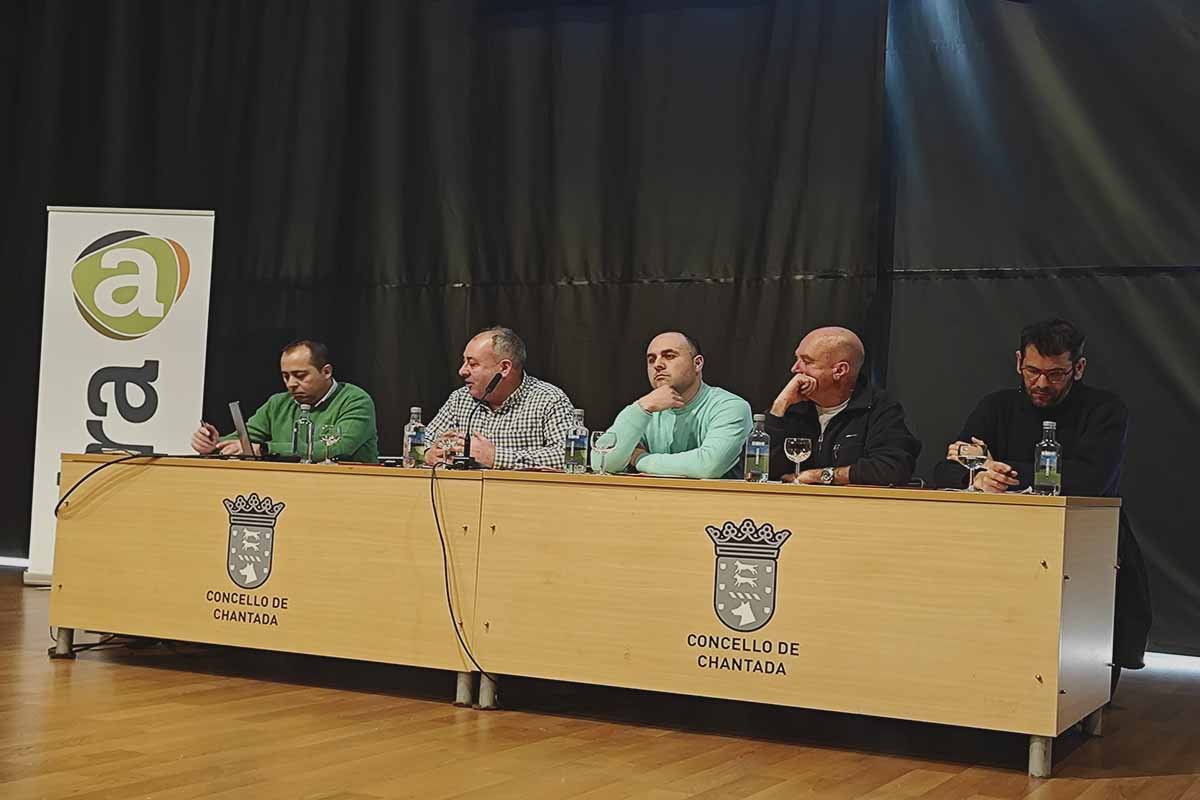
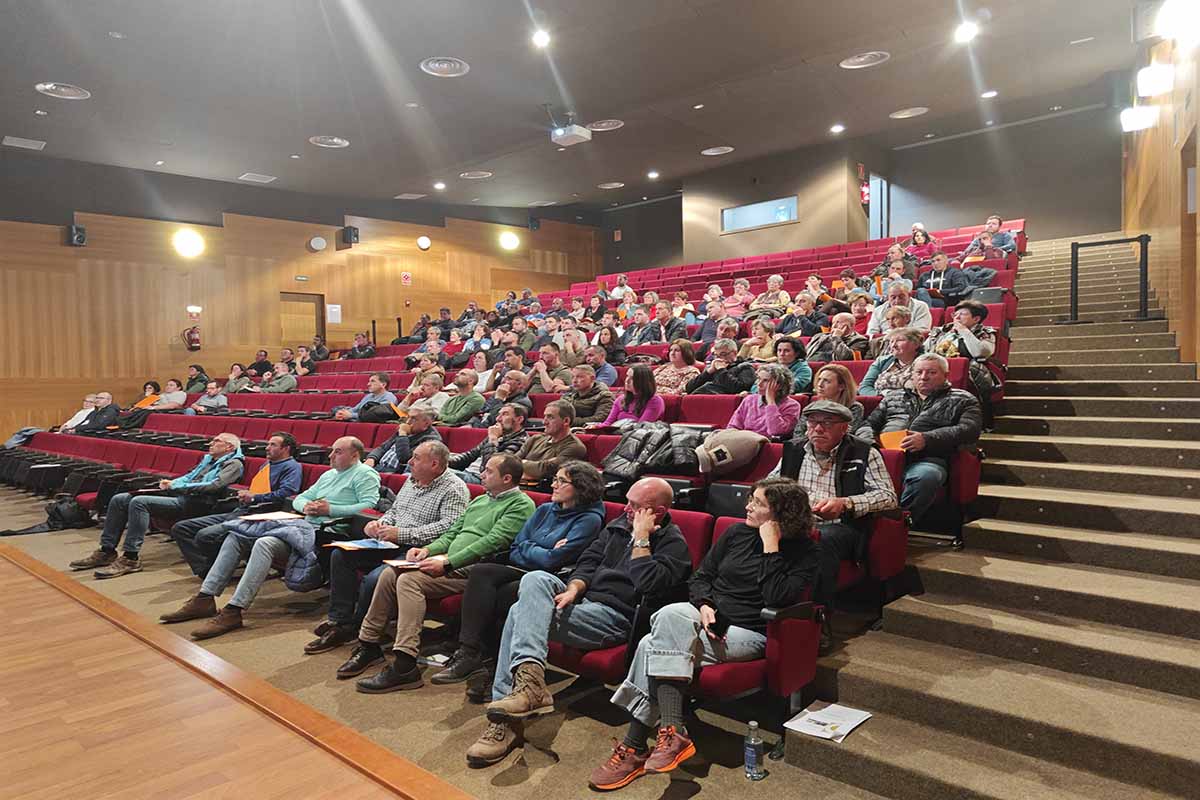
The veterinary team of ADSG AIRA organized a training day in the Auditorium of Chantada. It was addressed to the ADS members of Palas de Rei, Chantada, Carballedo and Taboada. The event was attended by various professionals to address the Epizootic Hemorrhagic Disease.
The first to speak was Alberto Díez Guerrier, clinical veterinarian specializing in ruminants and associate professor of Animal Health at the Faculty of Veterinary Medicine of the UCM. In his talk, entitled ‘EHE, a challenge for livestock’, he addressed the history of the disease, as well as its evolution in Spain between 2022 and 2023. He also discussed morbidity and mortality, as well as the consequences it leaves on livestock farms. He then presented measures for control and prevention, which must come from the administration. Finally, he discussed the prevalence studies that exist so far and reflected on whether the problem will diminish.
The next speaker was Víctor Collado Alcalá, technician of the Livestock Department at Cooperativas Agroalimentarias de España. His presentation focused on the update of the EHD situation in Spain. He recalled that, since the detection of the epizootic hemorrhagic disease in November 2022, it has been necessary to implement a series of initiatives and measures aimed, on the one hand, to control the disease from a sanitary point of view and, on the other hand, to maintain the productive and commercial structure of the sectors affected by this disease. He stressed that the sector, veterinarians and the administration have had to face the advance and development of the disease with a great lack of knowledge. During his talk he presented some of the studies that are being carried out with the aim of dealing with the disease at present and in the short term future. “These studies make it easier for us to manage the disease with greater certainty, since up to now there are too many unresolved questions that are fundamental for farmers.”
Xosé Lois Arias Pérez, head of the area of Veterinary Services of Rural Environment of Monforte de Lemos, was in charge of closing the presentations with ‘EHE in Galicia’. Lois addressed the conditions for the movement of livestock, the data in Galicia on the disease and the compensation provided by the Consellería, “which at the moment only cover the dead animals, not the costs generated by the animals that survive”. He also explained the current collaborations with the Ministry of Agriculture, which aim to collect data that help to know the disease.
Finally, a round table was held in which farmers and attendees had the opportunity to resolve any doubts they had about this disease, which causes great concern in the sector.