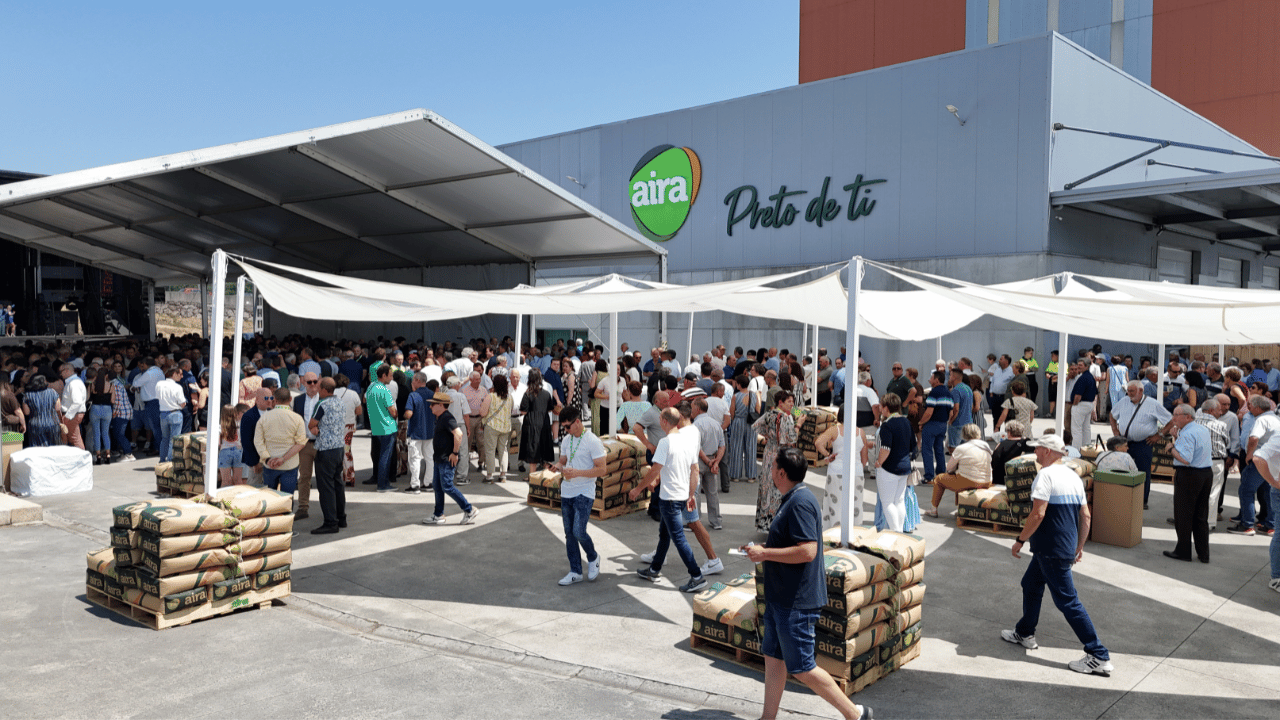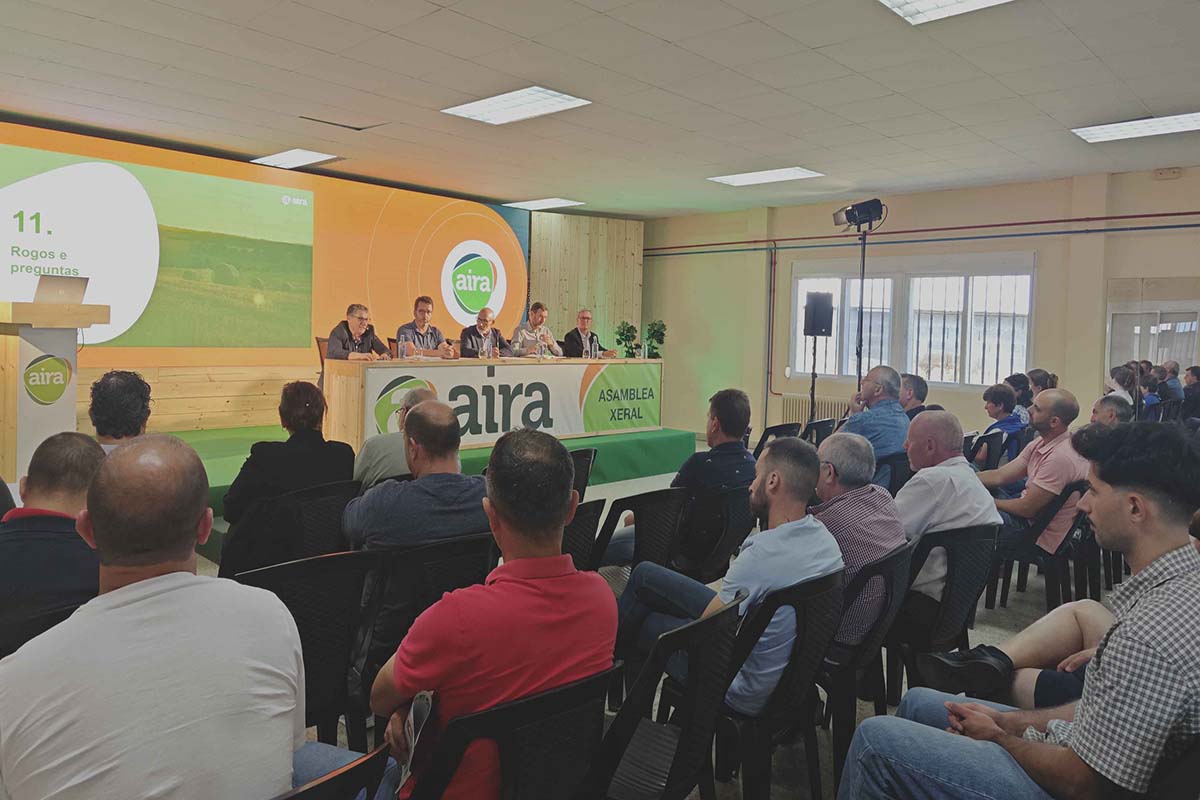
The agricultural and livestock cooperative AIRA held today, Tuesday, July 16, its Ordinary General Assembly in Taboada (Lugo). During the meeting, the accounts of the previous year were presented and a balance of the data obtained was made, which show very positive results.
In this year 2023, as in previous years, AIRA continued to grow to achieve a turnover of €203.6 million, doubling the turnover since the merger. This is the result of the sustained growth it experienced since the merger occurred in 2018. Overall, all group companies achieved a turnover of €241.7 million.
AIRA obtained an EBITDA of 7.6 million euros, a figure that shows the financial soundness of the company and allows it to face with solvency the 38.6 million euros destined to investments in the different areas of activity: transformation/commercialization, supply and services.
Of the 4.9 million euros of net profit, 2.8 million euros will be distributed, increasing the capital of the partners.
The cooperative grew in the three main business areas, especially in those activities of reference for the sector, such as milk and feed: Marketing 117 million liters of milk (almost 100% with Animal Welfare certification) and producing more than 277,000 tons of feed and mixtures, produced in the Taboada and Sarria plants.
Beyond the relevance of the numbers themselves, the most important thing is the value that the cooperative brings to the members and to the rural environment where it develops the activity, emphasized Daniel Ferreiro, general director of the cooperative and in charge of presenting the results to the members. Ferreiro emphasized the great problem that there is in recent times to get labor to work in rural areas, “both for the farms and for the cooperative is being a major difficulty.
Digitalization and sustainability
In order to align itself with the European strategy ‘From Farm to Fork’, the cooperative focuses on sustainability and digitization of both the entity itself and its members. This mechanism seeks a more sustainable agri-food model and to fulfill it it is necessary to determine measures to be applied from crops or farms to consumers themselves. AIRA works in this sense to achieve a cleaner and more sustainable economy. As an example, the cooperative is part of the CEPES project, which improves the competitiveness of dairy cattle farms through ecological innovation and low-carbon production with advice for the reduction of the carbon and water footprint.
During the past year, they were involved in the Trac Plus project, an initiative funded by the Ministry of Economic Affairs and Digital Transformation. Through it, they were able to develop specific digital solutions to carry out the digitization of the agents involved in the value chain of the dairy sector (from agricultural production to dairy products). In this way, food safety and complete traceability until delivery to the end customer can be guaranteed.
It is also necessary to highlight the work that is being carried out with robotic farms and that is why the AIRA team specialized to offer advanced solutions in terms of data management in these farms, giving value to the efficiency and accuracy in the daily operations of these modern dairy farms, so as to optimize production, improve herd health and maximize the profitability of the farm. As the first operators in dairy cattle, AIRA designs a program that is in continuous evolution.