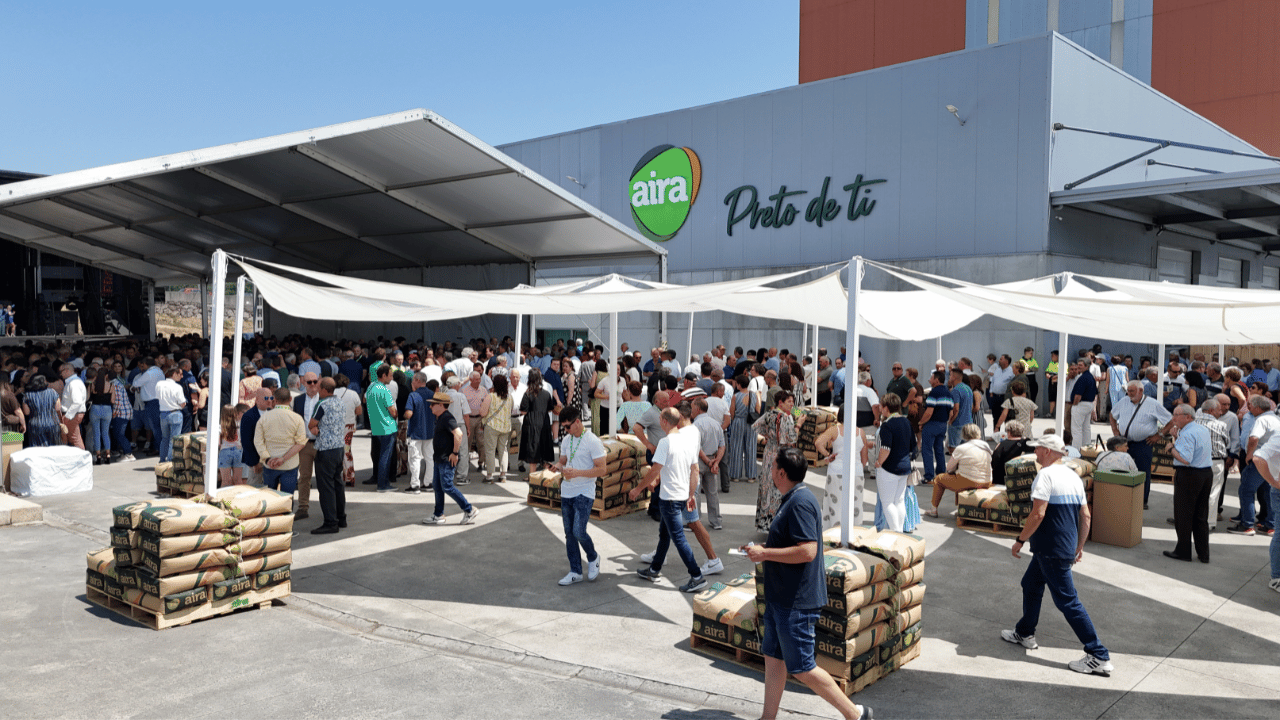
The Ministry of Agriculture, Fisheries and Food (MAPA) established some modifications related to the recently approved regulations that especially affect livestock. In this article we offer a summary of the main measures that affect the sector and that AIRA considers to be of interest to its members.
First of all, one of the announced modifications will be applied immediately, which is the one related to the appointment of a farm veterinarian by all cattle farms with more than 5 livestock units. The obligation to appoint a veterinarian as farm manager before May 18 will be postponed for one year, until June 1, 2025.
The digital notebook will become voluntary and its content will be simplified in terms of information for the administration. In this sense, the MAPA will grant aid both for the creation and provision of digital advisory services to farmers and ranchers, as well as for training and knowledge sharing. They will also grant direct incentives to farmers who use the digital notebook on a voluntary basis.
Likewise, the requirement to have the Integral Health Plan is extended for one year. This is a document provided for in Royal Decree 364/2023 that integrates sanitary, hygiene, biosecurity and rational use of medicines measures, which must be prepared by the farm veterinarian and is part of the Integrated Farm Management System (SIGE), which must be adhered to by cattle farms with 20 or more livestock units.
The compulsory electronic identification of cattle, planned for animals born as of June 30 of this year, is also postponed by one year and will be applied to animals born as of June 30, 2025. Another modification is in the
In the grazing eco-regimes, they allow the farmer to decide on an individual basis the days on which he will not mow, within a wider period and without limiting the cuts outside this period. In addition, they improve the requirements of the practice of establishing biodiversity islands, reducing the area not to be mowed from 7% to 4%. In this sense, an exemption from aid to eco-regimes was also established and the mantle is committed during the current CAP programming period.
Regarding the fertilization plan and having a fertilization advisor, it is also delayed by one year. In this sense, they relaxed the requirements related to the application of manure in certain areas where its application with improved means is not possible and the conditions of accumulation of manure on the farm. They also extended the deadline for land application by burial.
Finally, among the measures highlighted, the most significant change for Galician dairy farms is introduced in the BCAM 7 on crop land rotation, so that the possibility is given of complying with this requirement either through crop rotation in the plot after three years of the same crop or through diversification, with the same thresholds of main crops defined for the green payment in the previous CAP period.